What Is Trustpilot Review Removal?
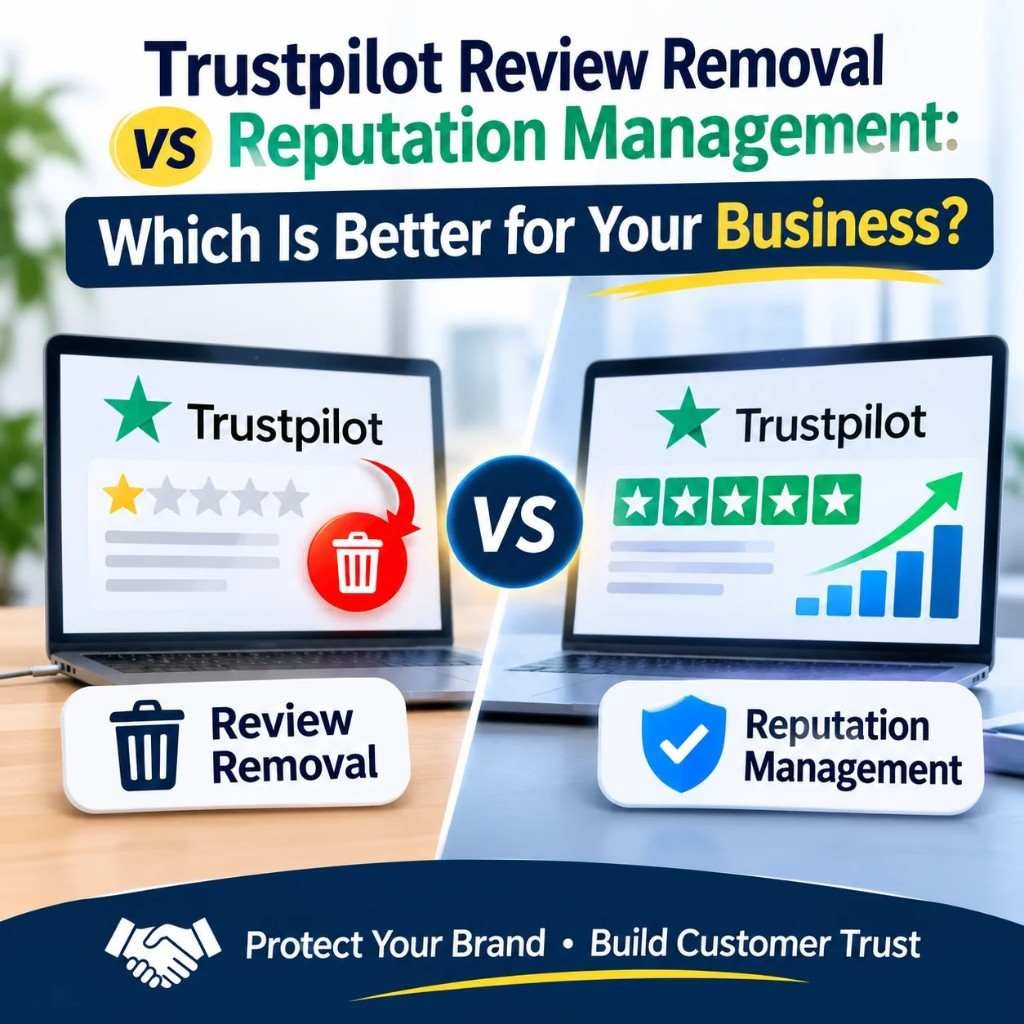
Trustpilot Review Removal vs Reputation Management – which one is better for your business? In this guide, we will compare both so you can choose the right one.Trustpilot review removal is the process of reporting a review that may break the platform’s rules and asking Trustpilot to investigate it. Businesses often consider this option when they receive fake reviews, misleading comments, or feedback that does not come from a genuine customer experience.
However, it is important to understand one thing: a negative review does not automatically qualify for removal. Customers have the right to share honest opinions about their experiences, even when those opinions are critical of a business.
Trustpilot uses its content moderation process to check reported reviews against its guidelines. If a review breaks those rules, the platform may take action. Depending on the issue, it may ask the reviewer for more information or remove the review.
For a business, review removal should be about addressing unfair or rule-breaking content, not hiding every negative comment. Before making a report, I would first check why the review seems suspicious and whether there is evidence to support a complaint.
Which Trustpilot Reviews Can Be Removed?
Not every review can be removed, but some types of content may violate Trustpilot’s guidelines.
Here are some examples:
- Fake customer reviews: Reviews posted by people who never used the business or had a genuine customer experience.
- Conflicts of interest: Reviews written by employees, business owners, competitors, or others with an undisclosed personal interest.
- Personal information: Reviews that expose private details, such as phone numbers, home addresses, or sensitive customer information.
- Abusive content: Reviews containing threats, hate speech, or other prohibited language.
- Promotional content: Reviews used mainly to advertise products, services, or unrelated websites.
If I notice any of these issues, I would collect relevant evidence and report the review through the proper Trustpilot review reporting process.
Trustpilot makes the final decision after reviewing the complaint. A business cannot demand removal simply because it disagrees with a customer’s opinion.
Why Trustpilot Does Not Remove Every Negative Review?
A negative review can still be genuine, even when a business believes it is unfair. For example, a customer may complain about late delivery, poor service, a refund problem, or a product that did not meet expectations.
These comments describe customer experiences. They do not automatically break Trustpilot’s rules.
I would separate two situations before taking action:
- A genuine negative review: The customer had an actual experience but was unhappy with the service. In this case, I would respond professionally, investigate the complaint, and try to resolve the problem.
- A review that may break platform rules: The review appears fake, contains private information, or involves another policy violation. In this case, I would report it and provide supporting evidence.
This distinction matters because reporting every unhappy customer can waste time and damage trust. A better approach is to use review removal only when there is a valid reason and handle genuine negative customer feedback through a professional response.
Many business owners think Trustpilot Review Removal is the only solution, but it is not always the best choice.
What Is Online Reputation Management?
Online reputation management is the process of building, protecting, and improving how people see a business online. It goes beyond removing negative Trustpilot reviews. It also includes monitoring customer feedback, responding to complaints, and making sure people can find accurate and helpful information about a brand.
For example, a business may have a few negative Trustpilot reviews and an old complaint appearing on the first page of Google. Removing one review will not solve the entire problem. Potential customers may still find those negative results when searching for the company.
This is where reputation management becomes useful. Instead of focusing only on removing negative content, I would focus on improving the overall online presence of the business and building customer trust over time.
How Reputation Management Works
Reputation management involves several activities that help businesses understand and improve their online image.
The main activities include:
- Reputation monitoring: Checking Trustpilot, Google, Reddit, and other websites for new reviews and brand mentions.
- Review response strategy: Replying to negative and positive customer feedback in a helpful and professional way.
- Customer feedback management: Understanding complaints and finding ways to improve products or services.
- Genuine review generation: Encouraging real customers to share honest feedback without offering rewards for positive reviews.
- Search result management: Publishing useful, relevant content that helps customers find accurate information about the business.
These activities do not guarantee that negative search results will disappear. However, they can help a business build a stronger online presence and address customer concerns.
Trustpilot Review Removal only works for fake or policy-breaking reviews, you cannot remove real negative reviews.
How It Helps Protect Brand Reputation
A business’s reputation is not based on one review or one website. People may check Trustpilot ratings, Google search results, Reddit discussions, and social media comments before making a decision.
I would focus on three important areas to protect a brand’s reputation:
- Responding to customer concerns: A clear and polite response shows that the business takes complaints seriously.
- Improving customer experience: Fixing repeated problems can reduce future complaints and improve customer satisfaction.
- Building a positive online presence: Sharing useful information and collecting genuine customer feedback helps people understand what the business offers.
For me, the main goal of reputation management is not to hide every negative comment. It is to create a more accurate and trustworthy picture of the business. This approach can help customers make informed decisions and support long-term brand reputation.
Trustpilot Review Removal vs Reputation Management: Key Differences
Trustpilot review removal and reputation management both help businesses deal with online reputation problems, but they serve different purposes. Review removal focuses on reporting content that may violate Trustpilot’s guidelines. Reputation management takes a wider approach by improving how customers see a business across different online platforms.
I would not treat them as competing services. The right choice depends on the type of problem your business is facing.
Review Removal vs Long-Term Reputation Protection
The biggest difference is the goal behind each approach. Review removal deals with specific reviews, while reputation management focuses on the overall online image of a business.
| Comparison | Trustpilot Review Removal | Reputation Management |
| Main purpose | Report reviews that may break platform rules | Protect and improve brand reputation |
| Main focus | Individual Trustpilot reviews | Multiple websites and platforms |
| Approach | Review reporting and dispute process | Monitoring, responses, and genuine feedback |
| Time frame | Depends on Trustpilot’s investigation | Usually an ongoing process |
| Expected result | A policy-violating review may be removed | A stronger and more balanced online presence |
| Best suited for | Fake or rule-breaking reviews | Ongoing negative feedback and reputation problems |
For example, a business may receive a suspicious Trustpilot review from someone who has never purchased its products. In this situation, review reporting may be the right first step.
Now imagine the same business has several genuine negative reviews, complaints on Reddit, and poor search results on Google. Removing one Trustpilot review will not solve these wider problems. A reputation management strategy would be more suitable.
Cost, Time, and Expected Results
The cost and time involved depend on the type of service, the size of the problem, and the work required.
Trustpilot review reporting does not require hiring a reputation management agency. A business can report a review through the available platform process and provide supporting evidence. However, removal is not guaranteed, and the investigation time can vary.
Reputation management may involve a larger investment because it can include ongoing monitoring, review responses, content creation, and search result management.
Before choosing either option, I would consider:
- Cost: Can you handle review reporting internally, or do you need professional support?
- Time: Is the problem limited to one suspicious review, or does it require ongoing work?
- Expected results: Do you want to challenge a specific review or improve your overall online reputation?
- Long-term value: Will the approach help prevent similar problems and improve customer trust?
I would avoid any company that guarantees review removal or promises immediate improvements in Google rankings. Both outcomes depend on factors outside an agency’s full control.
The best decision is to match the service to the actual problem rather than spending money on services your business does not need.
When Should You Try to Remove a Trustpilot Review?
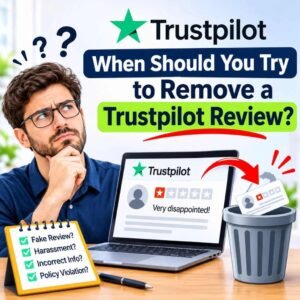
I would consider Trustpilot review removal when a review appears to break the platform’s guidelines, rather than simply because it gives the business a low rating.
Negative feedback can affect customer trust, but removing genuine complaints is not the right solution. Before submitting a report, I would check the review carefully, identify the possible violation, and collect evidence to support the complaint.
Here are three situations where reporting a review may be appropriate.
Fake Customer Reviews and Policy Violations
Fake customer reviews can create an unfair picture of a business. They may come from people who have never purchased a product, used a service, or had any direct experience with the company.
For example, a business may receive several similar reviews from accounts that cannot be linked to real customer experiences. This may raise concerns about review authenticity.
However, I would not assume that a review is fake just because the reviewer is unknown to the business. Trustpilot may need additional information to investigate the issue.
If I suspect a fake review, I would:
- Check the reviewer’s comments and available details.
- Look for evidence of a genuine customer interaction.
- Compare the review with relevant business records.
- Report the review if there are reasonable grounds to believe it breaks Trustpilot’s guidelines.
Misleading Reviews and Suspicious Activity
Some reviews may contain misleading statements, unusual activity, or information that does not match the customer’s actual experience.
For example, a competitor may post a review despite having no genuine customer relationship with the business. Another warning sign could be several reviews appearing within a short period with very similar wording.
These signs do not prove that a review is fake. There may be legitimate reasons behind similar complaints or sudden increases in reviews.
I would first check the available evidence instead of making assumptions. If I find a possible policy violation, I would use Trustpilot’s review reporting process and explain the concern clearly.
Reviews Containing Personal Information
A review may also need attention if it exposes someone’s private information.
For example, a customer might include an employee’s personal phone number, home address, or other sensitive details in a public review.
This creates a privacy concern that should not be ignored. I would save a record of the content, avoid sharing the personal information further, and report the review to Trustpilot under the relevant guidelines.
The key is to identify the actual problem. If a review contains private information or other prohibited content, reporting it may be appropriate. If it only describes an unhappy customer experience, a professional response is usually a better option.
That is why many businesses choose reputation management instead of Trustpilot Review Removal.
How to Remove or Dispute Negative Trustpilot Reviews
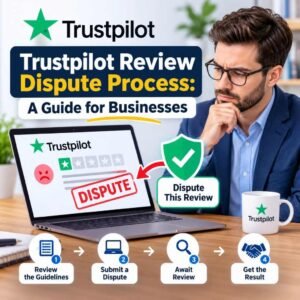
If I find a Trustpilot review that may break the platform’s rules, I would follow a clear reporting process instead of immediately contacting a removal agency. Trustpilot allows businesses to report reviews they believe violate its guidelines.
The important thing is to provide clear reasons and supporting evidence. Simply saying that a review is unfair or damaging to the business may not be enough.
Here are the steps I would follow to dispute a Trustpilot review.
Check Trustpilot’s Review Guidelines
Before reporting a review, I would read Trustpilot’s content guidelines and identify the specific rule that may have been broken.
For example, I would check whether the review contains:
- Fake or misleading customer experiences.
- Personal information that should not be public.
- Threats, hate speech, or abusive content.
- Promotional material or unrelated advertising.
- An undisclosed conflict of interest.
This step matters because Trustpilot does not remove reviews simply because businesses disagree with negative feedback.
Collect Evidence and Report the Review
Once I identify a possible violation, I would collect relevant evidence before submitting a report.
Useful evidence may include:
- Order numbers and transaction records.
- Customer communication and email records.
- Screenshots of the review.
- Dates of relevant customer interactions.
- Records showing why the review may be misleading or unrelated to a genuine experience.
After collecting the evidence, I would use the reporting option available through Trustpilot Business and explain the suspected violation clearly.
I would keep the complaint short, factual, and professional. Rather than writing that a review is damaging my business, I would explain which guideline may have been broken and provide evidence to support my concern.
What to Do If Trustpilot Rejects Your Request
A rejected removal request does not always mean there is nothing more I can do. I would first review Trustpilot’s decision and understand why the report was unsuccessful.
If I have new evidence or believe important information was missed, I would consider submitting an appeal through the available support process.
If the review describes a genuine customer experience, I would take a different approach:
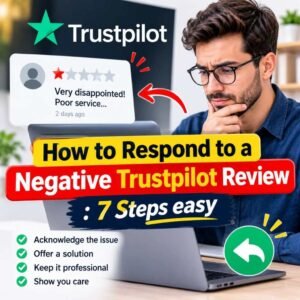
- Respond publicly and address the customer’s concern.
- Contact the customer through an appropriate private channel.
- Investigate the issue and offer a fair solution where possible.
- Improve the process that caused the complaint.
I would also avoid repeatedly reporting the same review without new evidence.
My advice is to focus on evidence when disputing a suspicious review and focus on customer service when dealing with genuine complaints. This helps protect your business reputation without ignoring legitimate customer feedback.
When Is Reputation Management a Better Choice?

Reputation management is a better choice when negative reviews are genuine or your business has reputation problems across multiple online platforms. In these situations, removing one Trustpilot review will not solve the bigger problem.
I would focus on understanding why customers are unhappy, responding to their concerns, and improving the information people find about the business online.
Here are three situations where reputation management can make a real difference.
Handling Genuine Negative Customer Feedback
Not every negative review is fake or unfair. Sometimes customers have genuine reasons to complain about a product, delivery, refund, or customer service.
Instead of trying to remove these reviews, I would focus on resolving the problems behind them.
A good review response strategy includes:
- Acknowledging the customer’s complaint.
- Apologizing when the business has made a mistake.
- Offering a suitable solution, such as a refund or replacement where appropriate.
- Taking the conversation to a private channel when personal details are needed.
- Using customer feedback to prevent similar problems.
A professional response can help potential customers see that the business takes responsibility for its service.
Managing Negative Google and Reddit Results
Sometimes the reputation problem goes beyond Trustpilot. A negative Reddit discussion, an old customer complaint, or an unfavorable article may appear when people search for a business on Google.
In this situation, removing a Trustpilot review will not fix the search results.
I would focus on publishing useful and relevant content that answers customer questions and explains what the business offers. This may include helpful blog posts, service pages, customer support information, and genuine customer stories.
Over time, these efforts may help improve the business’s visibility in search results. However, there is no guarantee that negative Reddit threads or other third-party pages will disappear or lose their rankings.
Building Customer Trust Through Genuine Reviews
A strong reputation does not come from removing every negative comment. It comes from providing good service and making it easy for genuine customers to share their experiences.
I would encourage businesses to:
- Invite real customers to leave honest reviews.
- Use Trustpilot’s official invitation tools.
- Avoid buying reviews or offering rewards for positive ratings.
- Respond to both positive and negative feedback.
- Monitor customer comments regularly.
Genuine customer feedback gives potential buyers a better idea of what to expect.
For me, the goal of reputation management is to build trust through better service, honest reviews, and helpful information. This is a more sustainable approach than focusing only on removing negative Trustpilot reviews.
Is Hiring a Reputation Management Agency Worth It?
Hiring a reputation management agency can be useful when negative reviews or search results are affecting your business and you do not have enough time or resources to manage them yourself.
However, I would not hire an agency just because it promises to remove negative Trustpilot reviews or improve your online rating. Before spending money, I would check what services it provides, how it works, and what results I can reasonably expect.
What Services Should an Agency Provide?
A professional reputation management agency should explain exactly how it plans to help your business. Its services may include:
- Review monitoring: Tracking new reviews and brand mentions across Trustpilot, Google, and other platforms.
- Review dispute support: Helping identify policy violations and prepare evidence for Trustpilot reports.
- Customer response management: Writing professional responses to negative customer feedback.
- Content creation: Publishing useful content that helps customers find accurate information about your business.
- Reputation reporting: Providing regular updates on reviews, search visibility, and completed work.
I would choose an agency that explains its process clearly rather than one that makes big promises without showing how it will achieve them.
How Much Does Reputation Management Cost?
The cost of reputation management depends on the size of the business, the number of platforms involved, and the services required.
For example, a small business that needs review monitoring and response support may need a smaller service package than a company dealing with negative search results across several platforms.
Before hiring an agency, I would compare:
- One-time review dispute support.
- Monthly review monitoring.
- Ongoing content creation and search result management.
- Full reputation management packages.
I would also ask whether there are setup fees, monthly charges, or minimum contract periods.
There is no single price that applies to every business. I would request a clear quote based on my actual needs rather than choosing an expensive package without understanding its value.
How to Avoid Agencies That Promise Guaranteed Results
One of the biggest warning signs is an agency that guarantees to remove every negative Trustpilot review or promises to clean up your Google search results within a few days.
Trustpilot makes its own moderation decisions. Similarly, no agency has full control over Google’s search rankings or third-party websites.
Before hiring an agency, I would look for these warning signs:
- Guaranteed removal of all negative reviews.
- Promises of instant improvements in search rankings.
- Offers to publish fake positive reviews.
- Unclear pricing or hidden contract conditions.
- No clear explanation of its methods.
- Requests to pay for services without regular progress reports.
I would also ask for examples of previous work, references where available, and a clear explanation of how success will be measured.
My advice is that a reputation management agency is worth considering when it offers honest, measurable services that match your business needs. Choose transparency and a clear work plan over promises of guaranteed results.
Which Approach Should Your Business Choose?

Choosing between Trustpilot review removal and reputation management depends on the problem your business is facing. I would not spend money on a full reputation management service if the issue is only one suspicious review. Similarly, reporting individual reviews will not solve a wider reputation problem.
I would first identify the problem and then choose the approach that makes the most sense.
When to Choose Review Removal
I would choose review removal when there is a clear reason to believe a Trustpilot review violates the platform’s guidelines.
This may include fake customer reviews, undisclosed conflicts of interest, personal information, or other prohibited content.
In this situation, I would:
- Identify the possible guideline violation.
- Collect relevant evidence.
- Report the review through Trustpilot.
- Follow the dispute process and review the decision.
Remember, removal depends on Trustpilot’s investigation. A negative rating alone is not a valid reason to demand removal.
When to Choose Reputation Management
I would choose reputation management when negative feedback affects the overall image of my business.
For example, if genuine customer complaints appear on Trustpilot, negative Reddit discussions rank on Google, and customers regularly raise the same service issues, removing individual reviews will not be enough.
A broader approach can help me:
- Monitor customer feedback across platforms.
- Respond to complaints professionally.
- Improve customer service.
- Publish useful and accurate business information.
- Build a stronger profile through genuine customer reviews.
This approach is more suitable for businesses that want to protect their reputation over time.
When to Use Both Strategies
Sometimes, a business needs both review removal and reputation management.
For example, imagine your business receives several suspicious Trustpilot reviews while genuine customers are also complaining about delivery delays.
I would handle these problems separately.
First, I would report reviews that appear to violate Trustpilot’s guidelines and provide supporting evidence. Then, I would investigate the delivery complaints, respond to customers, and improve the delivery process.
This way, I can address unfair reviews without ignoring genuine customer feedback.
My final recommendation is to use Trustpilot review removal to challenge reviews that may break platform rules. Use reputation management to improve customer trust and protect your business’s online image. When both problems exist, combining the two approaches is often the most practical choice.
Many business owners ask if Trustpilot Review Removal is the right choice. The truth is, Trustpilot Review Removal works best for fake reviews. If you get a fake review, you should start the Trustpilot Review Removal process quickly. But remember, Trustpilot Review Removal alone will not grow your business. You also need good reputation management. In short, use Trustpilot Review Removal for fake reviews, and use reputation management for long-term trust.
Frequently Asked Questions
Can I Remove a Negative Trustpilot Review?
Yes, but only when the review violates Trustpilot’s guidelines. A business can report suspicious or inappropriate reviews and provide supporting evidence. However, Trustpilot does not remove genuine negative reviews simply because a company dislikes them.
How Do I Dispute a Trustpilot Review?
I would first check Trustpilot’s review guidelines, identify the possible violation, and collect relevant evidence. Then, I would report the review through Trustpilot Business and explain the issue clearly. If the request is rejected, I would review the decision and consider an appeal if new evidence is available.
Can Trustpilot Remove Genuine Customer Reviews?
Trustpilot may investigate genuine reviews if they are flagged for further checks. For example, it may ask reviewers to provide evidence of their experience. However, a genuine review should not be removed simply because it contains negative feedback.
Can Reputation Management Push Negative Search Results Down?
Reputation management can help improve a business’s online presence by publishing useful content, earning genuine customer feedback, and managing brand information. These efforts may help other relevant pages gain visibility in search results. However, no agency can guarantee that negative Reddit threads, reviews, or other websites will lose their rankings.
Is Online Reputation Management Worth the Money?
It can be worth the investment if negative reviews or search results are affecting customer trust and business growth. However, the value depends on the services provided, the agency’s methods, and your business goals. I would compare pricing, check the work included, and avoid companies that promise guaranteed results.
Is Trustpilot Review Removal safe?
Yes, Trustpilot Review Removal is safe only if the review breaks Trustpilot’s rules.
Learn more about Google Business Profile and check our Local SEO Service for more help.