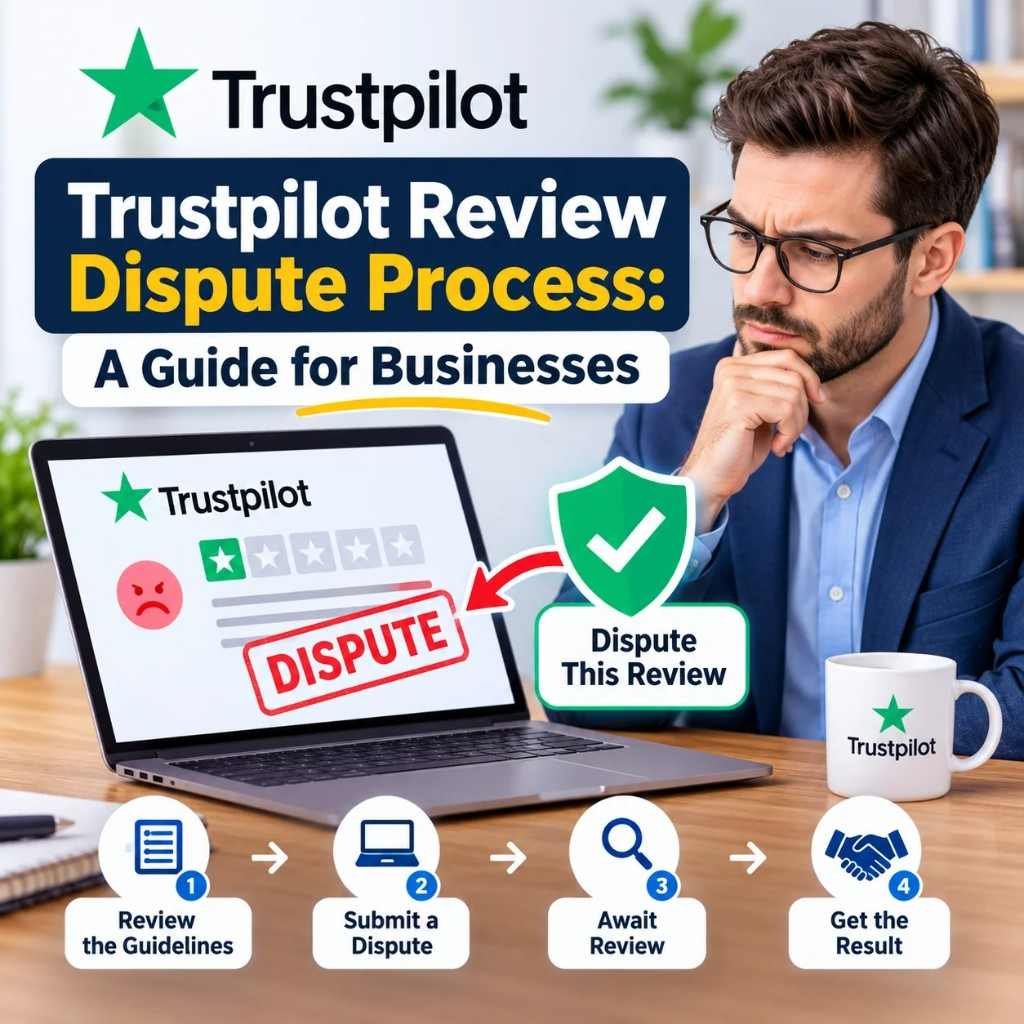
What Is the Trustpilot Review Dispute Process?
The Trustpilot review dispute process allows businesses to report reviews that may break the platform’s guidelines. For example, a business can report a review if it appears fake, contains harmful content, shares private information, or describes an experience with another company.
When I manage a business profile, I should not report a review just because it gives my business a low rating. Trustpilot allows customers to share honest opinions, even when those opinions are negative.
The main purpose of this process is to protect review authenticity and make sure customer feedback follows the platform’s rules.
I can use my Trustpilot Business account to report a review and explain why I believe it should be checked. Trustpilot’s Content Integrity Team then assesses the report. It may use automated tools, human reviewers, or both to investigate the reported content.
It is important to remember that reporting a review does not guarantee its removal. Trustpilot makes the final moderation decision based on its guidelines and the information available.
Which Trustpilot Reviews Can Businesses Dispute?
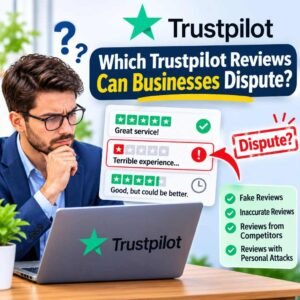
Not every negative review can be removed from Trustpilot. I need to understand the difference between an unhappy customer and a review that breaks the platform’s rules.
Trustpilot allows businesses to flag reviews for specific reasons. Here are some common situations.
Fake or Fraudulent Customer Reviews
A fake review is one that does not come from a genuine experience with a business. For example, someone may post a review to damage a company’s reputation without ever using its products or services.
I may report a review if I have a reasonable reason to believe that:
- The review describes a product or service my business does not offer.
- The review refers to a business location that does not exist.
- The content appears to be part of a fake review campaign.
- There are other clear signs that the review does not describe a genuine experience.
However, not recognizing a reviewer’s name does not automatically mean the review is fake. Customers can share genuine experiences without making a purchase, receiving an invitation, or using their real names publicly.
Reviews That Break Trustpilot’s Guidelines
Trustpilot also allows businesses to report reviews that contain content against its guidelines.
Some examples include:
- Personal information: Reviews that share another person’s private details, such as their phone number or email address.
- Harmful content: Reviews containing threats, hate speech, or abusive material.
- Advertising or spam: Reviews used to promote unrelated products, services, or websites.
- Wrong business: Reviews that clearly describe an experience with another company.
- Illegal or defamatory content: Content that meets Trustpilot’s criteria for harmful or illegal material.
If I find one of these issues, I can report the review through my Trustpilot Business account. I should select the correct reporting reason and explain the problem clearly.
Genuine Negative Reviews That Cannot Be Removed
A genuine negative review is not automatically a violation of Trustpilot’s rules. Customers have the right to share honest feedback, even when their experience was disappointing.
For example, a customer may complain about late delivery, poor customer service, product quality, or an unsatisfactory experience. If the review reflects a genuine interaction and does not break any guidelines, Trustpilot generally allows it to remain online.
In this situation, I should focus on solving the customer’s problem instead of trying to remove the review. A polite public response can also show other customers that my business takes complaints seriously.
How to Dispute a Trustpilot Review Step by Step
If I find a suspicious review on my business profile, I should report it through the official Trustpilot review reporting process. The important thing is to choose the correct reason and explain the problem clearly.
Here are the steps I can follow.
Step 1: Find and Report the Review
First, I need to log in to my Trustpilot Business account and find the review I want to report.
I should check the review carefully before taking action. I need to understand what the customer has written and identify anything that may break Trustpilot’s rules.
Once I find a valid reason, I can use the reporting option for that review to start the process.
Step 2: Choose the Correct Reporting Reason
Trustpilot asks businesses to select a reason when reporting a review. I should choose the option that best matches the problem.
For example, the concern may involve:
- Content that is harmful or illegal.
- Personal information shared without permission.
- Advertising or promotional material.
- A review that does not appear to describe a genuine experience.
- A review that clearly relates to another business.
I should remember that I can flag a review for one reason at a time. Choosing the correct reason helps Trustpilot understand what I want it to investigate.
Step 3: Submit Evidence to Support Your Dispute
After reporting the review, I should prepare any useful information that supports my complaint.
For example, if a reviewer mentions a product my business has never sold, I can explain this and provide relevant product information.
My explanation should be short, clear, and based on facts. I should avoid personal attacks or emotional language.
Trustpilot may also use its own detection systems to assess suspicious reviews. It does not automatically remove a review just because a business reports it.
Step 4: Wait for the Content Integrity Team’s Decision
After submitting my report, I need to wait for Trustpilot to review it. Its Content Integrity Team handles review-related concerns and checks whether reported content follows the platform’s rules.
Trustpilot will notify me of the outcome. If it needs more information from the reviewer, it may contact them and request action within three days.
I should keep copies of my report and supporting documents so I can refer to them if further action is needed.
What Evidence Do I Need to Dispute a Review?
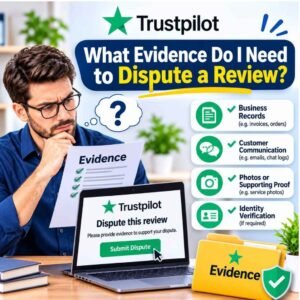
Good evidence can help Trustpilot understand why I believe a review breaks its guidelines. The type of information I need depends on the reason for reporting it.
Here are some useful records I can prepare.
Order Records and Customer Information
If I believe a review comes from someone who never purchased or used my services, I should check my business records first.
Some useful records include:
- Order numbers and purchase dates.
- Transaction records.
- Booking or service records.
- Customer communication history.
- Product delivery or service completion records.
For example, if someone claims to have purchased a product that my business does not sell, I can explain this and provide relevant product information.
However, not finding a customer’s name in my sales records does not prove that the review is fake. The person may have contacted my business or had another genuine experience.
Emails, Screenshots, and Other Business Records
Other documents can also help explain why I am disputing a review.
I can collect:
- Screenshots of the reported review.
- Relevant emails between my business and the reviewer.
- Customer support messages.
- Records showing the correct business or product details.
- Documents that support a suspected guideline violation.
Before submitting anything, I should check that the information is accurate and directly related to the complaint. I should also avoid sharing unnecessary personal or financial information about customers.
My advice is to keep the evidence organized and explain how each document supports the dispute. Clear information is more useful than sending a large number of unrelated files.
How Long Does Trustpilot Take to Investigate a Dispute?
After I report a suspicious review, I may need to wait while Trustpilot checks the complaint.
Trustpilot does not promise one fixed investigation time for every dispute. Simple cases may be handled faster, while complex cases can take longer. If Trustpilot contacts a reviewer for more information or asks them to update their review, it may give them three days to respond. This does not mean the entire investigation will finish within three days.
Possible Investigation Outcomes
After checking my report, Trustpilot may reach different decisions:
- Review removed: Trustpilot may remove the review if it finds a violation of its guidelines.
- Review stays online: If Trustpilot cannot confirm a violation, the review may remain visible.
- More information requested: Trustpilot may contact the reviewer or business for additional details.
- Review updated: The reviewer may make changes if Trustpilot asks them to correct an issue.
I should also understand that a review reported as harmful or illegal is temporarily hidden during the investigation. Other flagged reviews generally remain visible while Trustpilot checks them.
What to Do If Trustpilot Rejects My Report
If Trustpilot rejects my complaint, I should first read its decision carefully. I need to understand why the review was allowed to remain online.
If I believe something important was missed, I can challenge the decision by following the appeal instructions in Trustpilot’s email.
I should:
- Open the decision email from Trustpilot.
- Click the “Appeal our Decision” link.
- Explain why I believe the decision is incorrect.
- Attach new or relevant supporting documents.
- Submit the appeal for further review.
Trustpilot’s team of specialists will review the appeal. I should keep my explanation focused on facts and avoid sending the same unsupported complaint repeatedly.
Does a Paid Trustpilot Business Account Affect Review Disputes?

A business may wonder whether paying for a Trustpilot subscription makes it easier to remove fake or unfair reviews. This is an important question, especially for small businesses that want to manage their online reputation without spending too much money.
The answer is no. Paying for a Trustpilot Business plan does not guarantee faster review investigations or a higher chance of review removal.
Trustpilot states that its review guidelines apply equally to businesses, regardless of whether they use free or paid services. Its moderation decisions should be based on the reported content and applicable rules, not the subscription level.
A paid account may provide extra tools for collecting reviews, managing customer feedback, and understanding business performance. However, these features do not give a business special treatment during a review dispute.
Before choosing a plan, I should understand what each option offers and whether my business really needs those features.
I can compare the available options on the official Trustpilot pricing page.
My advice is to choose a paid plan for the tools my business needs, not because I expect it to remove negative reviews. A genuine review dispute should always be judged by the evidence and Trustpilot’s guidelines.
What Should I Do If a Negative Review Cannot Be Removed?
Sometimes, Trustpilot may decide that a negative review does not break its guidelines. In that case, I should not waste time trying to remove it again without a valid reason or new information.
Instead, I should focus on handling the complaint professionally and protecting my business reputation.
First, I should respond publicly to the review. A polite response shows other customers that I take their feedback seriously. I should acknowledge the problem, explain what I can do, and avoid arguing with the reviewer.
Next, I can contact the customer privately to understand the issue and find a solution. For example, if the complaint is about a late delivery, I can check the order and explain what happened. If a refund or replacement is appropriate, I can offer a suitable solution.
I should also encourage genuine customers to share their honest experiences. I can send review invitations after a purchase or completed service. However, I should never offer discounts, gifts, or rewards in exchange for positive reviews.
Finally, I should look for repeated complaints. If several customers mention the same problem, such as poor delivery or slow customer support, I need to improve that part of my business.
My advice is not to judge my business reputation by one negative review. A professional response, genuine customer feedback, and better service can help build customer trust over time.
Common Mistakes to Avoid When Disputing Trustpilot Reviews
When I dispute a Trustpilot review, I need to follow the platform’s rules carefully. Some businesses make mistakes because they focus more on removing negative feedback than proving a guideline violation.
Here are some common mistakes I should avoid.
- Reporting Every Negative Review
A low star rating does not mean a review is fake. I should report a review only when I have a valid reason to believe it breaks Trustpilot’s guidelines. I should also apply the same reporting standards to positive and negative reviews.
- Submitting a Dispute Without Evidence
I should not make unsupported claims when reporting a review. If I believe someone has never interacted with my business, I should explain why and provide relevant information where available.
- Paying for Fake Trustpilot Reviews
Buying fake reviews may seem like a quick way to improve my business profile, but it can damage customer trust. Trustpilot prohibits fake reviews and may take action against businesses involved in creating or purchasing them.
- Offering Rewards for Review Changes or Removal
I should never offer money, discounts, gifts, or other rewards to convince customers to change or remove negative reviews. Instead, I should resolve genuine complaints without putting pressure on customers.
- Using Services That Promise Guaranteed Review Removal
I should be careful with companies that promise to remove negative Trustpilot reviews within a fixed number of days. No outside service can guarantee Trustpilot’s moderation decision. The platform makes its own decisions based on its guidelines and available information.
Avoiding these mistakes can help me manage the Trustpilot review dispute process responsibly while protecting my business reputation.
Many businesses struggle with the Trustpilot Review Dispute Process. If you understand the Trustpilot Review Dispute Process, you can easily report a fake review. The Trustpilot Review Dispute Process starts with flagging the review. After that, the Trustpilot Review Dispute Process needs proper evidence. When you follow the Trustpilot Review Dispute Process correctly, Trustpilot will remove the fake review quickly.
Frequently Asked Questions
Can a Business Dispute a Negative Trustpilot Review?
Yes. A business can report a negative review if it believes the review breaks Trustpilot’s guidelines. However, a low rating or an unhappy customer is not enough reason for removal. I need to identify a specific rule violation and explain my concern clearly.
Can Trustpilot Remove a Fake Review?
Yes. Trustpilot can remove reviews that it identifies as fake or that violate its guidelines. It uses automated technology and human review to identify suspicious activity. However, reporting a review does not guarantee its removal.
Can I Appeal a Rejected Dispute?
Yes. If I disagree with Trustpilot’s decision, I can follow the appeal instructions in its decision email. I should explain why I believe the decision is incorrect and provide relevant supporting documents. Trustpilot’s specialists will review the appeal.
Does Trustpilot Remove Reviews From Non-Customers?
Not automatically. A person may leave a review based on a genuine experience without making a purchase. However, reviews that are fake or do not meet Trustpilot’s guidelines may be removed after investigation.
Does Paying for Trustpilot Improve Review Removal Chances?
No. Paying for a Trustpilot Business subscription does not guarantee review removal or special treatment during an investigation. Review decisions are based on Trustpilot’s guidelines, not the business’s subscription level.
Learn more about Google Business Profile and check our Local SEO Service for more help.