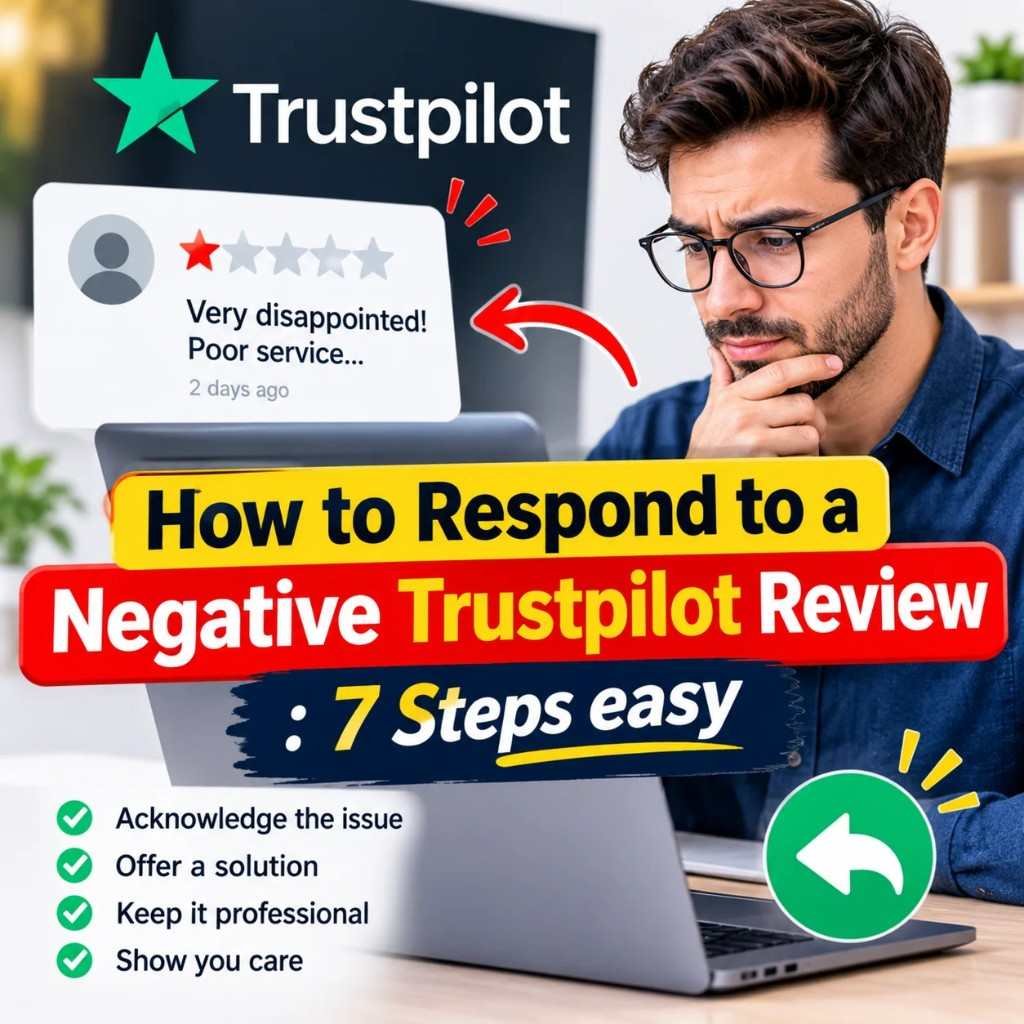
Why Should Businesses Respond to Negative Trustpilot Reviews?
When I receive a negative Trustpilot review, I should not ignore it. A negative review gives me a chance to understand what went wrong and show customers that my business cares about their experience.
Many people read customer reviews before choosing a business. They may also check how a company responds when someone has a problem. A thoughtful reply can show that the business takes customer feedback seriously.
Responding to negative reviews matters for several reasons:
- Build customer trust: A polite and honest response shows that I am willing to listen and take responsibility.
- Show professional communication: A calm reply can help potential customers see how my business handles complaints.
- Understand customer problems: Negative feedback can help me find problems with products, delivery, or customer service.
- Improve customer satisfaction: Offering a reasonable solution may help an unhappy customer have a better experience.
- Protect brand reputation: A public response gives me an opportunity to explain my position without arguing with the reviewer.
However, responding does not mean I have to agree with every complaint. Some reviews may contain incorrect details or describe situations that need further investigation. I should check the facts before replying.
I also should not treat every negative review as a threat. Honest customer feedback can help me improve my products and services.
The main goal is not simply to defend my business. It is to show customers that I listen, communicate professionally, and make a genuine effort to resolve problems.
How to Respond to a Negative Trustpilot Review Professionally
When I receive a negative Trustpilot review, I should respond calmly and professionally. My reply should show that I understand the customer’s concern and want to find a solution.
I do not need a long response. A clear, polite, and helpful reply is often more useful than a defensive explanation. Here are four steps I would follow.
Read and understand the customer’s complaint
Before writing a response, I should read the entire review carefully. I need to understand what happened and why the customer is unhappy.
For example, the complaint may be about a late delivery, poor customer service, a damaged product, or a refund problem.
I should also check my order records and speak with the customer support team if needed. This helps me avoid giving incorrect information or making assumptions.
Thank the customer and apologize when necessary
I should thank the customer for taking the time to share their experience. If my business made a mistake, I should offer a sincere apology.
A simple apology can make the response feel more human and respectful.
For example:
“Thank you for sharing your feedback. We are sorry that your experience did not meet your expectations. We understand your frustration and would like to help.”
I should avoid giving a fake apology or blaming the customer. My response should sound honest and show that I take the complaint seriously.
Explain the situation and offer a solution
After acknowledging the complaint, I should explain what I have found and offer a practical solution.
For example, if a customer complains about a delayed order, I can check the delivery status and explain the next steps. If the customer received a damaged product, I can discuss an available replacement or refund option, depending on my business policy.
I should keep my explanation short and avoid making excuses.
Most importantly, I should only promise something that my business can actually deliver.
Take the conversation offline when needed
Some complaints require private information, such as an order number, email address, or payment details. I should not ask customers to share sensitive information in a public Trustpilot response.
Instead, I can invite them to contact my customer support team through an official email address or support channel.
For example:
“Please contact our support team at [your support email] with your order details. We will review the issue and do our best to help you.”
I can still provide a public response so other readers know that I am taking the complaint seriously. Private communication can then help my team investigate and work towards a solution.
Always stay calm when you reply to a Negative Trustpilot Review, never argue with the customer.
Trustpilot Review Response Examples
Knowing how to respond to a negative Trustpilot review is easier when I have a few practical examples. The right response depends on the customer’s complaint and what happened.
I should avoid using the same reply for every review. Instead, I can adjust my response to the situation while keeping a polite and helpful tone.
Here are four Trustpilot review response examples that businesses can adapt.
Responding to a poor customer service experience
When a customer complains about poor customer service, I should acknowledge their frustration and show that I take their experience seriously.
Example response:
“Thank you for sharing your feedback. We are sorry that you did not receive the level of service you expected. This is not the experience we want our customers to have. We would appreciate the chance to understand what happened and make things right. Please contact our support team so we can look into your concern.”
Responding to a late delivery or missing order
If a customer complains about a late or missing delivery, I should check the order status before replying. I should also explain how I plan to help.
Example response:
“Thank you for bringing this to our attention. We are sorry that your order has not arrived on time. We understand how frustrating this can be. Please contact our support team with your order details so we can check the delivery status and help resolve the issue.”
Responding to an unfair or misleading review
Sometimes, a review may contain information that does not match my business records. I should not accuse the reviewer of lying or become defensive. Instead, I should politely explain that I cannot confirm the details and ask for more information.
Example response:
“Thank you for your feedback. We take all customer concerns seriously, but we have been unable to identify the experience described in your review. We would appreciate it if you could contact our support team with more details so we can investigate the matter properly.”
Responding to a complaint that has been resolved
When a customer’s problem has been fixed, I should thank them for giving my business the opportunity to resolve it. My response should confirm that I take customer satisfaction seriously.
Example response:
“Thank you for giving us the opportunity to resolve this issue. We are sorry for the inconvenience you experienced and appreciate your patience while we worked on it. Your feedback helps us improve our service, and we hope to provide you with a better experience in the future.”
Tip: These are sample responses, not ready-made replies for every situation. I should always adjust the wording to match the actual complaint and the solution my business can offer.
Should Businesses Respond to Every Negative Review?
Yes, I recommend responding to most negative Trustpilot reviews. A business response shows that I pay attention to customer feedback and take complaints seriously.
When potential customers visit my Trustpilot profile, they can see both customer reviews and business replies. If they find several unanswered complaints, they may have questions about how my business handles customer problems.
However, I do not need to write a long response to every review. The reply should match the situation.
Here is how I would handle different situations:
- Genuine customer complaints: Respond politely, acknowledge the problem, and offer a practical solution.
- Repeated complaints: Look for a common problem and explain what steps the business is taking to address it.
- Unclear reviews: Ask the reviewer for more details so I can investigate the experience.
- Abusive or irrelevant content: Avoid arguing publicly. Check whether the review breaks Trustpilot’s guidelines and report it if appropriate.
I should also avoid sending the same copied response to every unhappy customer. A personal and relevant reply feels more helpful than a standard message.
My advice is to make negative review responses part of your regular customer support process. Respond to genuine concerns, investigate unclear complaints, and stay professional even when you disagree with the reviewer.
Offer a real solution in your reply to a Negative Trustpilot Review, not just sorry.
How to Handle Fake or Unfair Trustpilot Reviews
Not every negative Trustpilot review is fake or unfair. Some customers may have genuine complaints, while others may post reviews that do not reflect a real customer experience or may break Trustpilot’s guidelines.
When I receive a review that seems suspicious, I should check the facts before taking action. I should not report a review simply because it gives my business a low rating.
When and how to report a suspicious review
If I believe a review breaks Trustpilot’s guidelines, I can report it through my Trustpilot Business account.
Before reporting it, I should check whether the review contains issues such as:
- Fake or misleading information about a customer experience.
- Spam or promotional content.
- Personal information that should not be shared publicly.
- Offensive or abusive language.
- Content that does not relate to a genuine service or buying experience.
I should select the reporting reason that best matches the issue and provide clear details or supporting evidence when requested.
Trustpilot provides different reporting reasons, such as reviews that are not based on genuine experiences, contain personal information, advertise products or services, or relate to another business. The available options depend on the review and the issue being reported.
What to do if Trustpilot does not remove the review
Trustpilot does not remove every review reported by a business. Its Content Integrity Team checks the available information and decides whether the review breaks its guidelines.
If Trustpilot decides to keep the review online, I would take these steps:
- Review the decision: Read Trustpilot’s explanation to understand why the review was not removed.
- Provide more evidence: If I have clear information showing a possible guideline violation, I can share it with Trustpilot.
- Request another review: If I believe the decision is incorrect, I can contact the Content Integrity Team and explain my concerns.
- Write a professional public reply: If the review stays online, I can respond politely and explain my position without attacking the reviewer.
Trustpilot may ask the reviewer for more information during an investigation. However, a review can remain online if no guideline violation is found.
I should never repeatedly report a review just because I dislike its rating. Misusing the reporting system can lead to action against my business account.
My advice is to focus on resolving genuine customer problems instead of trying to remove every negative review. A calm and honest public response can help potential customers understand how my business handles complaints.
Common Mistakes to Avoid When Responding to Negative Reviews

When responding to a negative Trustpilot review, I should be careful with my words. A poorly written reply can make an unhappy customer even more frustrated. It may also create a bad impression among potential customers.
Here are some common mistakes I would avoid:
- Arguing with customers: I should never turn a public response into an argument. Even if I disagree with a complaint, I should remain polite and explain my position calmly.
- Ignoring negative reviews: Leaving genuine complaints unanswered can make customers feel that their concerns do not matter.
- Copying the same reply: Using identical responses for every complaint can make my business look careless. Each reply should address the customer’s actual problem.
- Sharing private information: I should never publish customer phone numbers, email addresses, payment details, or private order information in a public response.
- Making false promises: I should not promise refunds, replacements, or other solutions unless my business can provide them.
- Blaming the customer: Instead of accusing someone, I should focus on understanding the problem and finding a reasonable solution.
- Asking customers to remove honest reviews: I should not pressure customers to delete or change genuine feedback. I can politely ask them to update their review if their experience improves, but the decision must remain theirs.
The most important thing is to stay honest, respectful, and focused on resolving the customer’s problem. A professional response should show that I care about customer experience, not just my business rating.
Follow up privately after responding to a Negative Trustpilot Review to solve the issue fully.
Frequently Asked Questions
Can responding to negative reviews improve customer trust?
Yes. A professional response can show potential customers that I listen to feedback and take complaints seriously. It also gives me a chance to explain how my business handles problems. However, a response alone cannot guarantee customer trust. I must also take action to resolve genuine complaints.
Should I apologize if I disagree with a complaint?
Yes, I can express regret that the customer had a poor experience without accepting blame for something that did not happen. I should check the facts, explain my position politely, and offer to investigate the issue further.
Can I ask a customer to update their negative review?
Yes. If I have resolved the customer’s problem, I can politely invite them to update their review to reflect their latest experience. However, I should never pressure them, offer rewards, or make a refund conditional on changing their feedback.
How quickly should I respond to a negative Trustpilot review?
I recommend responding as soon as I have checked the complaint and gathered the necessary information. A timely reply shows that I take customer concerns seriously. I should also make sure my response is accurate rather than rushing to reply without understanding the problem.
Can a business remove a negative Trustpilot review?
A business cannot simply delete a negative review because it dislikes the rating. However, it can report a review that appears to break Trustpilot’s guidelines. Trustpilot will investigate and decide whether the review should be removed. Genuine negative feedback that follows the guidelines may remain published.
Should I delete a Negative Trustpilot Review?
No, you should never try to delete a Negative Trustpilot Review. Instead, reply professionally and solve the customer’s problem.
Learn more about Google Business Profile and check our Local SEO Service for more help .