When Should You Report a Trustpilot Review?
I would report a Trustpilot review when I have a clear reason to believe it breaks the platform’s rules. A review should not be reported just because it gives a business a low rating or contains negative feedback.
Trustpilot allows customers to share honest experiences, including complaints. However, it does not allow fake reviews, harmful content, or reviews that expose someone else’s private information.
Before reporting a review, I would check what it says and identify the rule it may have broken. Here are three situations where reporting may be appropriate.
Fake Reviews and False Information
Fake reviews can damage a business’s reputation and mislead potential customers. Trustpilot does not allow reviews that are not based on genuine customer experiences.
For example, I would consider reporting a review if:
- The reviewer claims to have purchased a product that the business does not sell.
- The review appears to describe an experience with a different company.
- Someone posts a review without having a genuine experience with the business.
- A competitor posts a review to damage another company’s reputation.
However, not recognizing a reviewer’s name does not automatically mean the review is fake. A customer may use a different name or have contacted the business without making a purchase.
The important thing is to look for evidence of a possible rule violation rather than make assumptions.
In this guide, you will learn How to Report a Trustpilot Review that breaks the rules. Many business owners don’t know How to Report a Trustpilot Review correctly, so Trustpilot ignores them. If you follow this method for How to Report a Trustpilot Review, you will get fast results.
Abusive Content and Personal Information
Trustpilot expects users to communicate respectfully. Reviews containing certain types of harmful content may break its guidelines.
I would consider reporting a review if it includes:
- Threats, harassment, or abusive language.
- Hate speech or discriminatory comments.
- Another person’s private phone number, email address, or home address.
- Personal information or images shared without permission.
- Illegal or harmful content.
For example, a customer can share a negative experience with a business, but posting an employee’s private phone number or making threats is different.
Trustpilot has rules to protect both reviewers and businesses from harmful content.
Reviews That Break Trustpilot’s Guidelines
Some reviews may look like normal customer feedback but still break Trustpilot’s rules.
For example, a review may contain advertising, promotional links, misleading claims, or content unrelated to the business’s service. Reviews written to promote another company or manipulate public opinion may also violate its guidelines.
Before reporting, I would check Trustpilot’s official Guidelines for Reviewers and Guidelines for Businesses.
These guidelines help me understand whether the review contains a real content violation. They also make it easier to explain why I believe a particular review should be investigated.
In this guide, you will learn How to Report a Trustpilot Review that breaks the rules. Many business owners don’t know How to Report a Trustpilot Review correctly, so Trustpilot ignores them. If you follow this method for How to Report a Trustpilot Review, you will get fast results.
How to Report a Trustpilot Review (Step by Step)
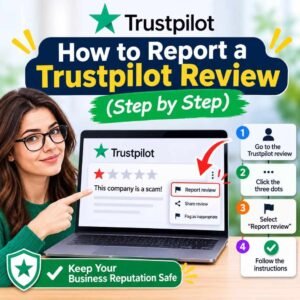
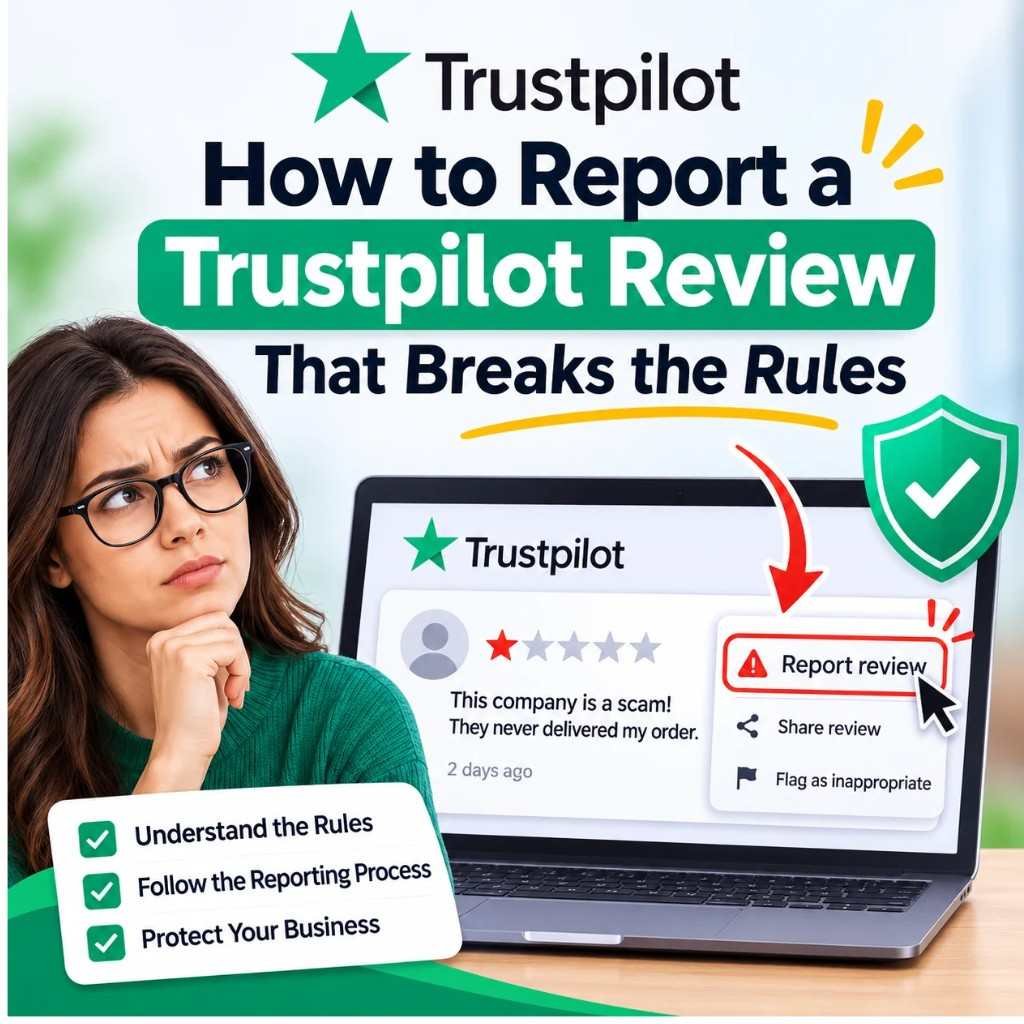
If I find a Trustpilot review that appears to break the platform’s rules, I can report it using Trustpilot’s flagging tool. Businesses can report reviews through their Trustpilot Business accounts. Other users can also report content they believe breaks the rules.
Here is how a business can report a review.
Find the Review and Click the Report Option
First, I would open the Trustpilot profile where the review appears and find the specific review I want to report.
If I manage the business, I would:
- Log in to my Trustpilot Business account.
- Go to Manage reviews.
- Select Service reviews and open the Inbox.
- Find the review I want to report.
- Click the flag icon below the review.
I would check the review carefully before reporting it to make sure I have selected the correct one.
Select a Reason for Reporting
After clicking the flag icon, Trustpilot asks me to choose a reason for reporting the review.
The available reporting reasons for businesses include:
- Harmful or illegal: For threats, hate speech, or other harmful content.
- Personal information: When a review shares another person’s private information.
- Advertising or promotional: When a review contains unwanted advertising or promotional content.
- Not based on a genuine experience: When there is a valid reason to believe the review does not describe an eligible experience.
- About a different business: When the review clearly relates to another company or business profile.
I would select the reason that best matches the actual problem. Choosing the correct reason is important because Trustpilot investigates the issue based on the selected reporting category.
Explain the Violation and Submit Your Report
Next, I would follow the instructions shown on the screen. Trustpilot may ask me to highlight the exact words or parts of the review that break its rules.
I would explain the problem clearly and avoid making claims I cannot support.
For example, if a review describes a product that my business does not sell, I could explain that the product mentioned is not part of my business and provide relevant details.
Before submitting, I would check that:
- I selected the correct reporting reason.
- I highlighted the relevant content, if requested.
- My explanation is clear and factual.
- I have not reported the review simply because I dislike its rating.
Finally, I would submit the report and keep a record of the review and reporting details.
Some reporting reasons require an extra step. For example, businesses may need to request more information from a reviewer before reporting a review as not based on a genuine experience.
I would follow the instructions provided by Trustpilot for the selected reason.
For more details, see Trustpilot’s official guide: How to Flag Service Reviews From Your Business Account.
What Evidence Should You Provide When Reporting a Review?
When I report a Trustpilot review, I want to make sure my complaint is clear and supported by facts. A simple statement that a review is fake may not be enough to explain the problem.
If I manage a business, I would check my customer records and collect information that supports my concern. The evidence should relate directly to the reported review and the Trustpilot rule it may have broken.
Customer and Order Records
Customer and order records can help me check whether a review may be connected to a real business experience.
For example, if someone claims to have purchased a product, I would check my records for that transaction.
Useful records may include:
- Order numbers and purchase dates.
- Customer names and transaction details.
- Product or service information.
- Booking or delivery records.
- Records of customer communication.
However, not finding a customer’s name does not prove that the review is fake. The reviewer may have used another name or contacted the business through a different channel.
I would use these records to explain what I checked and why I believe the review needs further investigation.
Screenshots, Emails, and Other Supporting Evidence
I would also collect relevant documents that help explain the reported content.
Depending on the situation, useful evidence may include:
- A screenshot showing the complete review.
- A link to the reported Trustpilot review.
- Emails or messages related to the reviewer’s claims.
- Documents showing that a product or service mentioned in the review does not match my business.
- Evidence of threats, harassment, or exposed personal information.
I would keep my evidence clear, relevant, and easy to understand. I would avoid sharing unnecessary customer details or sensitive personal information.
Most importantly, I would explain how each piece of evidence relates to the possible violation. Trustpilot makes the final decision after reviewing the report, so providing evidence does not guarantee that a review will be removed.
What Happens After You Report a Trustpilot Review?
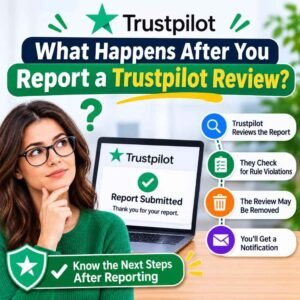
After submitting a report, I would wait for Trustpilot to review the reported content. Reporting a review does not mean it will be removed automatically.
Trustpilot checks whether the reported review breaks its guidelines. The decision depends on the content, the reason for reporting, and any evidence provided.
Here is what I would expect after submitting a report.
How Trustpilot Reviews Reported Content
Trustpilot has a Content Integrity Team that handles reports about reviews and checks possible violations of its rules.
During the review process, Trustpilot may:
- Examine the reported review.
- Check the reason selected for reporting.
- Review the explanation and supporting evidence.
- Ask for more information if needed.
- Decide whether the review follows its guidelines.
When a business flags a review, Trustpilot creates a case for assessment. Depending on the situation, it may use automated checks, human reviewers, or both.
I would keep an eye on my Trustpilot account and email for updates or requests for more information. If Trustpilot asks for further details, I would provide clear and relevant evidence.
Possible Outcomes of a Review Report
After investigating the report, Trustpilot may reach different outcomes depending on its findings.
- The review stays online: If Trustpilot finds that the review follows its guidelines, it may remain visible on the business profile.
- The reviewer is asked to make changes: In some cases, Trustpilot may contact the reviewer and ask them to correct the content or provide more information.
- The review is taken offline: If Trustpilot confirms a violation that is not resolved, it may take the review offline.
- More information is requested: Trustpilot may ask the reviewer or business for additional details before making a decision.
I would not assume that every negative or disputed review will be removed. Trustpilot allows genuine customer feedback, even when it is critical of a business.
My main goal would be to report actual rule violations and provide enough information for Trustpilot to investigate them fairly.
Why Might Trustpilot Reject Your Report?
Not every reported review will be removed. Sometimes Trustpilot may decide that a review does not break its rules, even when a business disagrees with what the reviewer has written.
If my report is rejected, I would first check the reason for the decision. Understanding why Trustpilot rejected the report can help me decide what to do next.
The Review Does Not Break Its Guidelines
Trustpilot allows customers to share honest opinions about their experiences. A review does not have to be positive to remain on the platform.
For example, I cannot expect Trustpilot to remove a review simply because:
- The customer gave my business one star.
- I disagree with the reviewer’s opinion.
- The review contains criticism of my products or services.
- The review may affect my business reputation.
If the reviewer describes a genuine experience and follows Trustpilot’s guidelines, the review may stay online.
I would focus on identifying a specific rule violation rather than arguing that the review is unfair or damaging.
Not Enough Evidence to Support Your Report
Another reason for rejection may be a lack of clear evidence.
For example, I might report a review because I cannot find the customer in my database. However, this alone may not prove that the person never had an experience with my business.
To make my report stronger, I would:
- Explain exactly what information appears incorrect.
- Check relevant customer and order records.
- Provide documents that support my explanation.
- Identify the specific content that may break Trustpilot’s rules.
I would also avoid making unsupported accusations against customers or competitors.
A clear explanation and relevant evidence can help Trustpilot understand my concern. However, the final decision remains with Trustpilot.
Before you start, you must understand How to Report a Trustpilot Review step by step. The best way for How to Report a Trustpilot Review is to collect proof first, then report. When you know How to Report a Trustpilot Review properly, Trustpilot takes you seriously.
What to Do If Trustpilot Does Not Remove the Review?
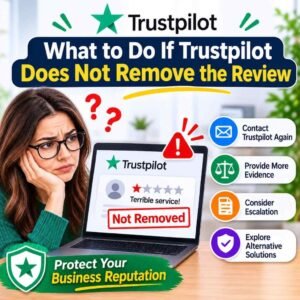
If Trustpilot decides to keep a reported review online, I would not immediately give up. I would first understand its decision and check whether I have any new information that could support my complaint.
There are a few practical steps I can take to address the situation.
Contact Trustpilot Support
If I believe Trustpilot has misunderstood my report, I would contact its support team for clarification.
I would explain:
- Which review I reported.
- Why I believe it breaks Trustpilot’s guidelines.
- What evidence I provided.
- Why I disagree with the decision.
I would keep my message short and professional. I would also include the review link and any relevant report details.
I can visit the Trustpilot Help Center to find the available support options.
Provide Additional Evidence
If I have new evidence that I did not include in my first report, I would organize it and explain why it matters.
For example, I might provide:
- Additional order or transaction records.
- Relevant customer communication.
- Evidence that the review describes a product my business does not offer.
- Screenshots showing specific content that may violate Trustpilot’s rules.
I would avoid submitting the same complaint repeatedly without new information. Instead, I would follow Trustpilot’s instructions for providing further evidence or requesting another review.
Respond Publicly to the Review
Sometimes a review may remain online even after I report it. In that situation, I can use Trustpilot’s business response feature to explain my position.
I would write a calm and professional response that:
- Acknowledges the reviewer’s concerns.
- Explains any facts that can be shared publicly.
- Offers a way to resolve the problem privately.
- Avoids personal attacks or accusations.
For example, if I cannot identify the order mentioned in a review, I could politely ask the reviewer to contact my support team with their order details.
A professional response can help potential customers understand how I handle complaints. It also shows that I take customer feedback seriously, even when I disagree with a review.
Remember, How to Report a Trustpilot Review is only for fake or unfair reviews. If you use How to Report a Trustpilot Review correctly, Trustpilot will help you protect your business.
Frequently Asked Questions
Can I report a fake Trustpilot review?
Yes. I can report a review if I believe it is fake or does not follow Trustpilot’s guidelines. I should select the appropriate reporting reason and explain why I believe the review is not based on a genuine experience. Providing relevant evidence can help Trustpilot investigate the complaint.
Can a business report a review from a non-customer?
Yes. A business can report a review if it has a genuine reason to believe the review breaks Trustpilot’s rules. However, not finding someone in the customer database does not automatically prove that the person is not a customer. The business should explain its concerns and provide relevant evidence. Trustpilot may also allow the business to request more information from the reviewer.
How long does Trustpilot take to review a report?
The review time can depend on the type of complaint and the information provided. Some reports may require further investigation or additional evidence. I would check my Trustpilot account and email for updates rather than assume every report will be handled within a fixed number of days.
Can Trustpilot remove a negative review?
Trustpilot can take reviews offline when they violate its guidelines. However, it does not remove genuine reviews simply because they contain negative feedback or give a business a low rating. The decision depends on whether the review breaks the platform’s rules.
What happens if Trustpilot rejects my report?
If Trustpilot rejects my report, I would first read the explanation. If I have new evidence or believe an important detail was missed, I can contact Trustpilot through its available support channels. I can also respond publicly to the review in a calm and professional way.
Want to learn the full process? Read our complete guide on Trustpilot Review Dispute Process.