What Is a Suspicious Trustpilot Review?
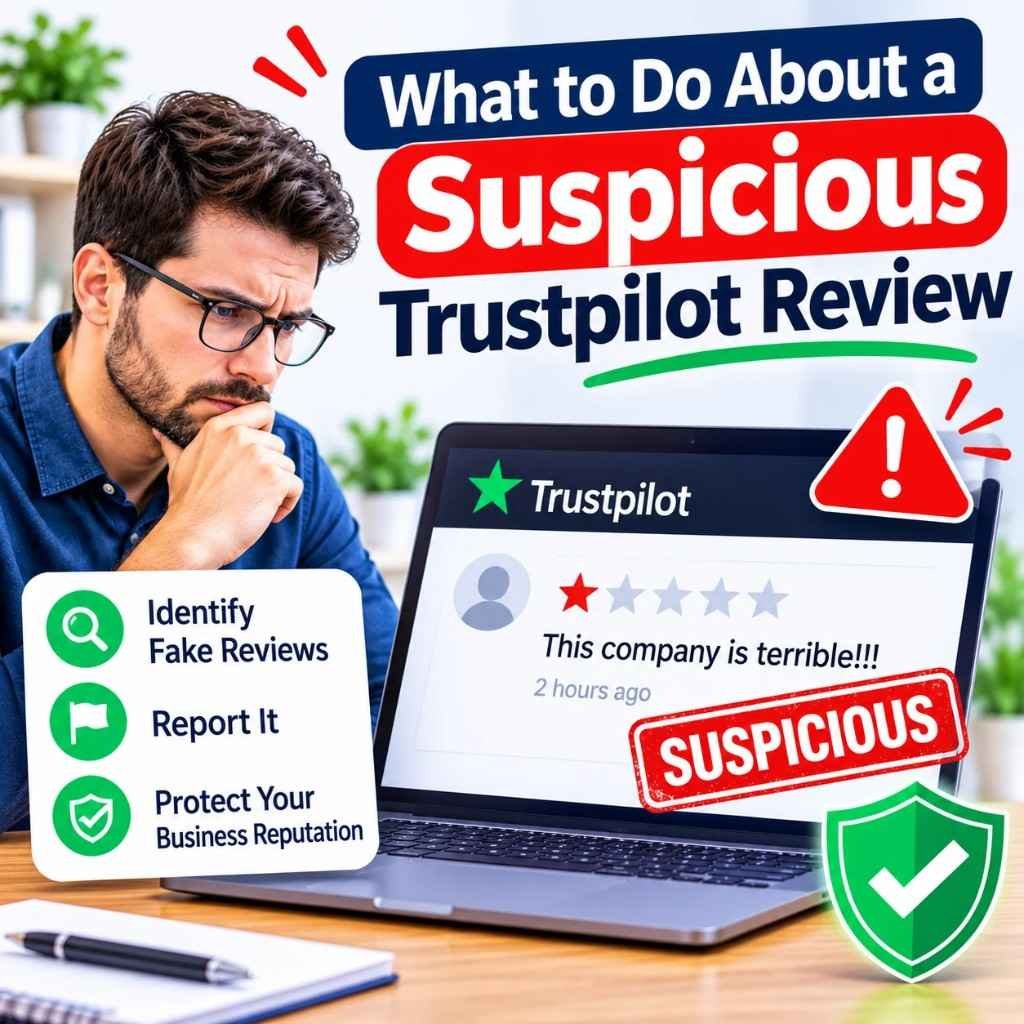
One fake Trustpilot review can destroy months of hard work in just one night.But don’t panic. You can remove it.A suspicious Trustpilot review is a review that raises questions about whether it is genuine, accurate, or based on a real customer experience. It may contain false claims, describe a service the business does not offer, or show signs of unusual activity.
However, I would not call every negative review fake. A genuine customer may have a bad experience, even if I cannot find their name in my records.
For example, a person might leave a review about a delayed order, poor customer service, or a refund problem. The business may not agree with the complaint, but that does not automatically make the review suspicious.
I would look more closely when a review:
- Describes a purchase or service that my business does not provide.
- Contains claims that appear unrelated to my business.
- Uses wording that is very similar to other reviews.
- Appears to confuse my company with another business.
- Makes serious claims without enough detail to understand the issue.
Trustpilot allows people to share their experiences with businesses, but reviews must follow its content guidelines.
My advice is simple: check the facts before reporting a suspicious Trustpilot review. Look for clear signs of a possible rule violation instead of reporting a review just because it gives your business a low rating.
If you want to win, you must follow the Trustpilot Review Dispute Process carefully. Many owners give up too early, but the Trustpilot Review Dispute Process works if you provide strong proof.
How to Identify a Suspicious Trustpilot Review
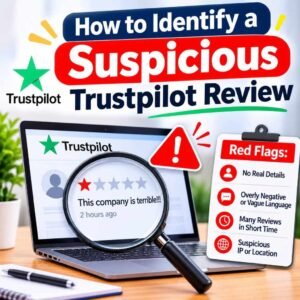
When I check a suspicious Trustpilot review, I do not judge it by its star rating alone. A one-star review can come from a genuine unhappy customer. Instead, I look at the review details, customer experience, and any unusual signs.
Here are some things I would check before deciding whether to report a review.
Unusual Review Patterns and Repeated Wording
I would look for unusual patterns in the reviews posted on a business profile. For example, several reviews may appear within a short period and use almost the same words.
Other warning signs include:
- Several reviews with very similar wording.
- Many reviews posted within a short time.
- Repeated complaints that contain the same unusual details.
- A sudden change in review activity.
These patterns may need further checking, but they do not prove that the reviews are fake.
Reviews About the Wrong Business or Service
Sometimes, people leave reviews on the wrong business profile. This can happen when two companies have similar names or offer related services.
For example, a customer may complain about a missing payment from one online platform but post the review against another platform with a similar name.
I would check whether the review mentions my actual products, services, website, or business location. If the reviewer has confused two companies, I may have a valid reason to report the review.
Reviewer Accounts With Little Activity
I would also look at the reviewer’s public profile when available. An account with only one review or very little activity may deserve a closer look.
However, a new reviewer is not automatically a fake reviewer. Many genuine customers create an account only when they want to share their first experience.
I would consider the account history along with other signs before reporting anything.
Claims You Cannot Match With Customer Records
Another warning sign is a review that describes a transaction or experience I cannot verify.
For example:
- The reviewer mentions an order number that does not exist.
- The complaint describes a product my business never sold.
- The reviewer claims to have contacted support, but I cannot find a matching conversation.
- The review mentions a service my company does not provide.
Still, I would check different names, email addresses, dates, and order details before making a decision. A customer may use a different name when posting a review.
The important thing is to look for facts, not assumptions. One unusual detail does not prove review manipulation. I would consider the full situation before reporting a suspicious Trustpilot review.
What to Do When You Find a Suspicious Trustpilot Review
Finding a suspicious Trustpilot review can be frustrating, especially when it contains claims that may harm your business reputation. However, I would not rush to report it or argue with the reviewer.
I would first check the facts, save useful information, and compare the review with Trustpilot’s rules. Here are the steps I recommend.
Check Your Customer and Order Records
My first step would be to check whether the review matches a real customer experience.
I would look through:
- Customer names and email addresses.
- Order numbers and purchase dates.
- Payment and delivery records.
- Customer service emails and messages.
- Refund requests and complaint history.
If I cannot find a matching customer, I would not immediately assume the review is fake. The customer may have used a different name or purchased through another account.
Save the Review and Collect Evidence
Before reporting a suspicious review, I would save its details. This helps me explain the problem clearly if Trustpilot asks for more information.
I would collect:
- A screenshot of the full review.
- The direct URL of the review.
- The reviewer’s public profile details, if relevant.
- Related order or service records.
- Any messages that help explain the situation.
I would keep the evidence factual and relevant. I would not change screenshots or include private customer information unnecessarily.
Check Trustpilot’s Review Guidelines
Before submitting a report, I would read the official Trustpilot Guidelines for Reviewers.
These guidelines explain what reviewers can and cannot post. They help businesses understand whether a review may break the platform’s rules.
For example, I would check whether the review:
- Is not based on a genuine experience.
- Contains harmful or illegal content.
- Includes private or personal information.
- Promotes a product or service.
- Describes an experience with a different business.
I would focus on the specific rule that may have been broken rather than simply saying the review is unfair.
My advice: Check your records, save the evidence, and understand the relevant guidelines before taking action. This will help you make a clearer and more reasonable report.
How to Report a Suspicious Trustpilot Review
If I find a review that may break Trustpilot’s rules, I can report it through my Trustpilot Business account. Trustpilot provides a flagging tool that allows businesses to ask its Content Integrity Team to investigate suspicious reviews.
However, I should report a review only when I have a genuine reason to believe it violates the platform’s guidelines. A low star rating or negative comment is not enough.
Here is how I would report a suspicious Trustpilot review.
Find and Flag the Review
First, I would log in to my Trustpilot Business account.
Then, I would follow these steps:
- Go to Manage reviews in the dashboard.
- Select Service reviews.
- Open the Inbox.
- Find the suspicious review.
- Click the flag icon below the review.
This opens the reporting process. I can then select a reason for reporting the review.
Choose the Right Reporting Reason
Trustpilot provides different reporting reasons depending on the type of problem. I would choose the option that best matches the issue.
Some reporting reasons include:
- Not based on a genuine experience: When there are valid reasons to question whether the reviewer had an eligible experience with the business.
- About a different business: When the review clearly describes another company or service.
- Harmful or illegal: When the review contains threats, hate speech, or other harmful content.
- Personal information: When the review shares private information.
- Advertising or promotional: When the review contains promotional or advertising content.
I would not select a reason simply because I want a negative review removed. The reporting reason must match the actual problem.
Submit Evidence and Track Your Report
After choosing a reporting reason, I would follow the instructions shown on the screen. Depending on the reason, Trustpilot may ask me to highlight the problematic content or request more information from the reviewer.
For example, when I report a review as not based on a genuine experience, Trustpilot may first ask me to request information from the reviewer. The reviewer is given three days to respond before I can proceed with the investigation if the issue remains unresolved.
Once I submit the report, I can check its progress through the flag icon under the review or by visiting Manage reviews → Service reviews → Flagging activity.
I would keep an eye on the report and check any updates from Trustpilot. Submitting a report does not guarantee that the review will be removed.
For the latest instructions, I recommend reading Trustpilot’s official guide: How to Flag Service Reviews From Your Business Account.
What Happens After You Report a Trustpilot Review?
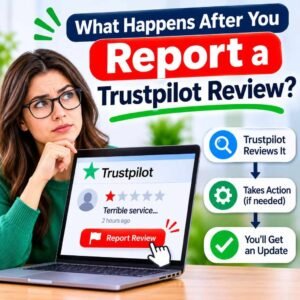
After I report a suspicious Trustpilot review, the platform reviews the information I provide. However, reporting a review does not mean it will be removed automatically.
Trustpilot may investigate the review, contact the reviewer for more information, or ask the business to provide further details. The final decision depends on the evidence and whether the review breaks its guidelines.
How Trustpilot Investigates Reported Reviews
After receiving a report, Trustpilot’s Content Integrity Team checks the reason for reporting and the available information.
Depending on the situation, Trustpilot may:
- Review the content of the reported review.
- Check whether it follows the review guidelines.
- Ask the reviewer to provide more information about their experience.
- Give the business an opportunity to provide relevant evidence.
- Take action if the review breaks the platform’s rules.
I would make sure my report explains the exact problem. Clear information can help Trustpilot understand why I believe the review needs further investigation.
Possible Outcomes of a Review Investigation
After investigating a reported review, Trustpilot may reach different decisions.
- The review is removed
If Trustpilot finds that the review breaks its guidelines, it may remove the review from the platform.
- The review remains published
If Trustpilot finds that the review follows its rules, it may remain visible on the business profile. A negative opinion alone is not enough reason for removal.
- More information is requested
Trustpilot may ask the reviewer or business for additional information before making a decision.
- The review is updated
In some cases, a reviewer may edit their review after providing more information or resolving an issue with the business.
I would not expect every investigation to have the same outcome. Each report depends on its own facts and evidence.
What to Do If Trustpilot Rejects Your Report
If Trustpilot decides not to remove a suspicious review, I would first read its explanation carefully. I would check whether I selected the correct reporting reason and provided enough supporting information.
Here is what I would do next:
- Review Trustpilot’s decision and understand the reason.
- Check whether I have new or relevant evidence.
- Follow the available appeal or support process if I believe the decision is incorrect.
- Keep my public response professional.
- Avoid repeatedly reporting the same review without new information.
If I still disagree with the decision, I can contact Trustpilot through its official Help Centre.
My main advice is to stay calm and focus on evidence. Even if a suspicious review remains online, a clear and professional response can help other customers understand the situation.
How to Respond to a Suspicious Trustpilot Review
Reporting a suspicious Trustpilot review is not the only way to handle the situation. I would also consider writing a public response. A professional reply allows me to explain my side and show potential customers that I take feedback seriously.
Even if I believe a review contains false information, I would avoid arguing with the reviewer. My goal is to provide a clear explanation without making the situation worse.
Write a Calm and Professional Response
When responding to a suspicious customer review, I would keep my message short, polite, and helpful.
I would follow these simple steps:
- Thank the reviewer for sharing their feedback.
- Explain that I take customer concerns seriously.
- Ask for more details if I cannot identify the experience.
- Offer to investigate the issue.
- Provide a suitable way to contact my support team.
I would avoid accusing someone of being a fake reviewer unless I have clear evidence. A calm response can help protect my business reputation and build trust with potential customers.
What to Say When You Cannot Identify the Customer
Sometimes, I may not find a matching order or customer record. In that situation, I would not immediately accuse the reviewer of making a false claim.
Instead, I would politely ask for more information so I can investigate the matter.
Example response:
“Thank you for sharing your feedback. We take all customer concerns seriously, but we are currently unable to identify the experience described in your review. We would appreciate it if you could contact our support team with more details so we can look into this matter.”
This type of response shows that I am willing to investigate the complaint without making unsupported claims.
Avoid Sharing Private Customer Information
When replying publicly, I would never share sensitive customer information to prove that a review is suspicious.
For example, I would avoid publishing:
- Customer names and private email addresses.
- Phone numbers and home addresses.
- Order details and payment information.
- Private conversations or support messages.
If I need more information, I would ask the reviewer to contact my business through a private support channel.
I would also avoid threats, personal attacks, or arguments. A professional response should focus on resolving the concern, not blaming the reviewer.
Remember: Other people may read your response before deciding whether to trust your business. A respectful reply can show that you take customer feedback seriously, even when you disagree with a review.
Can Trustpilot Remove a Fake or Misleading Review?
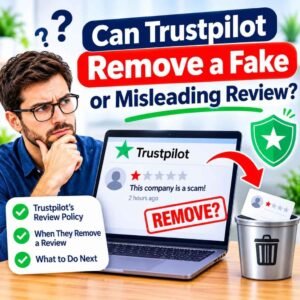
Yes, Trustpilot can remove a review if it finds that the content breaks its guidelines. However, a business cannot demand removal simply because a review is negative, unfair, or damaging to its reputation.
When I find a review that appears misleading, I would first check whether it violates a specific Trustpilot rule. The platform makes its own decision after reviewing the available information.
Which Reviews May Break Trustpilot’s Rules?
Trustpilot has guidelines that explain what reviewers can and cannot post. A review may be removed if it violates these rules.
Some examples include:
- Fake experiences: Reviews that are not based on a genuine experience with the business.
- Wrong business: Reviews that describe another company or its services.
- Harmful content: Reviews containing threats, hate speech, or illegal material.
- Private information: Reviews that expose personal or sensitive details.
- Promotional content: Reviews used to advertise products, services, or websites.
I would check the exact content and reporting reason before asking Trustpilot to investigate. Not every incorrect statement or disputed complaint automatically breaks its guidelines.
Does Every Reported Review Get Removed?
No. Reporting a review does not guarantee its removal.
Trustpilot investigates reported reviews based on its guidelines and the available evidence. If the review follows the rules, it may remain published even if the business disagrees with the customer’s experience.
For example, a customer may leave a one-star review because of a delayed delivery. The business may believe the complaint is unfair, but the review can still represent a genuine customer experience.
I would focus on reporting clear policy violations rather than trying to remove every negative comment.
You can read more about the platform’s rules in the official Trustpilot Guidelines for Reviewers.
How to Protect Your Business From Review Manipulation
Protecting my business reputation requires more than reporting suspicious reviews. I would also build good review practices and keep track of customer feedback.
The best approach is to encourage honest reviews, monitor unusual activity, and maintain clear customer records.
Monitor Reviews and Encourage Genuine Feedback
I would check my Trustpilot profile regularly so I can notice unusual review activity early.
Here are some steps I would follow:
- Check new reviews regularly.
- Look for unusual patterns or repeated wording.
- Invite genuine customers to share honest feedback.
- Ask all customers for reviews, not just those who are happy.
- Never offer rewards in exchange for positive reviews.
- Report reviews only when there is a valid reason.
I would also avoid buying reviews from third-party sellers. Artificial reviews can damage customer trust and put my business at risk of violating Trustpilot’s rules.
Keep Customer Records and Respond to Feedback
Accurate customer records can help me investigate complaints and respond to suspicious reviews.
I would keep useful business records, such as:
- Order and transaction details.
- Delivery and service records.
- Customer support conversations.
- Refund and complaint history.
- Relevant communication with customers.
I would also respond to both positive and negative reviews in a professional way. If a customer reports a genuine problem, I would try to understand the issue and offer a suitable solution.
Good review management is not about having only five-star ratings. It is about building trust through honest customer feedback and responsible business practices.
Remember, the Trustpilot Review Dispute Process is only for fake or unfair reviews. If you use the Trustpilot Review Dispute Process correctly, Trustpilot will help you.
Frequently Asked Questions
How can I tell if a Trustpilot review is fake?
I would look for unusual review patterns, repeated wording, incorrect business details, and claims that do not match my customer records. However, these signs do not prove a review is fake. I would check the facts before reporting it.
How do I report a fake Trustpilot review?
I can report a suspicious review through my Trustpilot Business account. I would find the review, click the flag icon, select the correct reporting reason, and provide any requested evidence. Trustpilot will then review the report.
Can I report a review if I cannot identify the customer?
Yes. I can report a review if I have a valid reason to believe it breaks Trustpilot’s guidelines. However, not finding a matching customer in my records does not automatically prove that the review is fake.
How long does Trustpilot take to investigate a review?
The investigation time can depend on the reporting reason and the information available. Some reports may require additional information from the reviewer or business. I would check my Trustpilot Business account for updates rather than assume every report follows the same timeline.
Can Trustpilot remove a negative review just because a business disagrees?
No. A negative review is not automatically a policy violation. Trustpilot may remove a review if it breaks its guidelines, but businesses cannot demand removal simply because they dislike the rating or disagree with the customer’s opinion.
Learn more about Google Busniess Profile and check our Local SEO Service for more help.