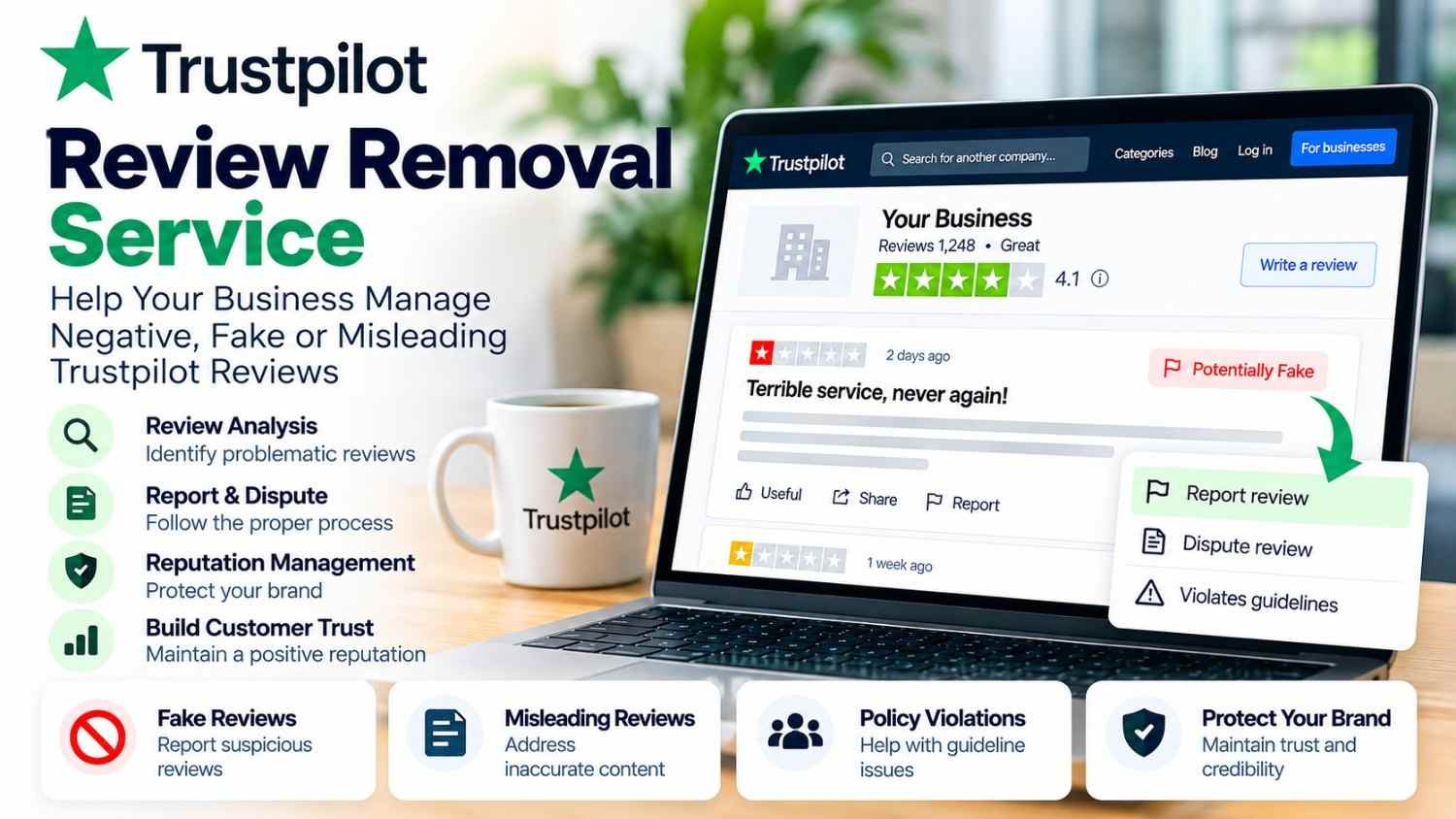
A Trustpilot review removal service is a professional service that helps businesses assess problematic reviews and navigate the appropriate reporting, dispute, and reputation-management processes.
The important distinction is that a professional service should not promise to remove every negative review. Trustpilot states that businesses can flag reviews that breach its guidelines, but simply disliking a rating or disagreeing with criticism is not a valid reason for flagging a review
A legitimate review-management service may therefore help a business:
- Assess whether a review appears potentially problematic
- Identify the relevant policy concern
- Organize supporting information
- Assist with the appropriate reporting process
- Help the business respond professionally to legitimate criticism
- Develop a broader review and reputation-management strategy
The goal should be legitimate review management, not manipulating a company’s review profile.
What Does a Trustpilot Review Removal Service Actually Do?
A good service should begin with review assessment, rather than immediately assuming that every negative review should be removed.
The assessment can consider questions such as:
- Does the review appear to describe a genuine experience?
- Does it concern the correct business?
- Does it contain potentially harmful or illegal material?
- Does it contain another person’s personal information?
- Does it contain advertising or promotional material?
- Is there another identifiable guideline concern?
- Would responding publicly be more appropriate than reporting it?
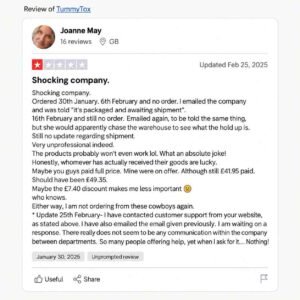
Trustpilot’s current business guidelines identify several grounds on which reviews can be flagged, including harmful or illegal content, personal information, advertising or promotional content, reviews not based on a genuine experience, and reviews concerning a different business.
This makes review eligibility analysis more useful than simply calling every one-star review a “fake review.
Can a Review Removal Service Guarantee That a Review Will Be Removed?
No legitimate service should guarantee removal.
Trustpilot makes the final decision about whether flagged content breaches its guidelines. Its current guidance specifically says that businesses cannot have reviews removed simply because they consider them unfair or critical.
That means there is an important difference between:
“We will remove your negative review.”
&
“We can assess potentially problematic reviews and help you follow the appropriate reporting or dispute process.”
The second approach is more accurate and sustainable because the outcome depends on the platform’s assessment.
Can Companies Remove Reviews From Trustpilot?
A company does not have unilateral control over removing a Trustpilot review.
Businesses can flag reviews that they believe breach Trustpilot’s guidelines, and Trustpilot assesses the reported content. Trustpilot says that businesses and consumers can flag content, while misuse of the flagging process is not tolerated.
The key principle is simple:
Negative does not automatically mean removable.
A customer can legitimately have a poor experience with a business and express that experience negatively. A low star rating by itself is not evidence that a review violates platform rules.
Can a Company Remove a Genuine Negative Review?
Generally, a business should not approach a genuine negative review as something that automatically needs removal.
If the review reflects a real customer experience and does not violate applicable guidelines, the better strategy may be to:
- Respond professionally
- Acknowledge the customer’s concern
- Explain relevant facts
- Offer an appropriate resolution
- Learn from recurring feedback
- Continue building genuine customer reviews
Trustpilot’s business guidelines encourage businesses to engage with reviews professionally and politely.
When Might a Business Have Grounds to Report a Review?
A business may have grounds to flag a review when there is a specific guideline concern.
Trustpilot currently lists categories including:
- Harmful or illegal content
- Personal information
- Advertising or promotional content
- Content not based on a genuine experience
- Content about a different business
The business should identify the actual reason for reporting rather than simply selecting a reason because the review is negative.
How Can You Remove a Negative Trustpilot Review?
The better question is:
“Does this review contain a legitimate reason to be reported?”
If the answer may be yes, a business can investigate the issue and use Trustpilot’s reporting process.
Should You Report the Review or Respond to It?
It depends on the situation.
| Situation | Recommended Action | Main Goal |
|---|---|---|
| Genuine negative customer experience | Respond professionally | Resolve concern |
| Potentially fake/suspicious review | Investigate and report if appropriate | Protect review integrity |
| Potential policy violation | Flag through the appropriate process | Request platform assessment |
| Review concerns another business | Report the relevant issue | Correct the business association |
| Multiple negative reviews | Review-management strategy | Improve overall reputation |
The important point is that reporting and responding are not mutually exclusive reputation strategies.
A business can address a legitimate customer complaint while separately reporting content that appears to violate platform rules.
What Evidence Can Help With a Review Dispute?
Evidence should be relevant, factual, and connected to the specific concern.
Depending on the situation, useful information may include:
- Transaction or service records
- Relevant communication
- Order information
- Dates and locations
- Evidence concerning the business relationship
- Information showing that the review may concern another business
- Documentation relevant to the reported guideline issue
However, businesses should not assume that failing to recognize a reviewer’s name proves that the review is fake. Trustpilot says reviewers can use usernames and do not necessarily have to use their real names.
This is an important distinction when investigating suspicious reviews.
How Do You Dispute a Trustpilot Review?
The process should start with identifying the specific reason for the dispute.
Trustpilot’s current guidance provides a Business-account process for flagging reviews that break its rules. For example, businesses can go to their review management area, locate the relevant review, select the flag option, and choose the applicable reason. The exact process can vary according to the type of issue being reported. Trustpilot Help Center
What Should a Business Check Before Reporting a Review?
Before submitting a report, ask:
- What exactly is wrong with the review?
- Which guideline category appears relevant?
- Can the concern be supported with factual information?
- Is the issue about the content itself or simply the rating?
- Would responding to the reviewer be more appropriate?
This prevents emotional reporting.
What Steps Should a Business Take When Preparing a Dispute?
A practical workflow is:
1. Identify the issue
Determine exactly why the review may be problematic.
2. Review the relevant guidelines
Use the current Trustpilot rules rather than relying on assumptions.
3. Gather relevant information
Prepare factual documentation connected to the concern.
4. Submit the appropriate report
Use the relevant Trustpilot reporting/flagging process.
5. Cooperate with follow-up requests
Trustpilot may request additional information or documentation depending on the case.
6. Respond professionally when appropriate
If the review remains online because it does not breach the guidelines, consider addressing the customer’s concerns publicly.
Can Fake Reviews Be Removed From Trustpilot?
Trustpilot explicitly prohibits fake reviews. Its current business guidelines state that fake reviews are not allowed and can be removed.
However, businesses should be careful about labeling a review “fake” simply because they don’t recognize the reviewer.
Trustpilot explains that:
- Reviewers can use usernames.
- Genuine experiences are not limited to purchases.
- Reviewers do not necessarily need to be invited by the business.
- A business may not recognize every genuine reviewer.
How Can Businesses Identify Potentially Fake or Suspicious Reviews?
Instead of relying on assumptions, look for specific evidence that raises a legitimate concern.
For example:
- The review clearly refers to another business.
- The content describes a product or location the business does not offer.
- There is evidence suggesting the reviewer did not have the claimed experience.
- The content appears to fall within another prohibited category.
Trustpilot says that when a review is flagged as not being based on a genuine experience, it may use detection technology and may request information or documentation from the reviewer.
So the better approach is “potentially suspicious review” → investigation, rather than automatically declaring “fake review.”
Why Was My Trustpilot Review Removed?
Not every review that disappears should be assumed to have been removed because a business requested it.
Trustpilot’s guidelines apply to both businesses and reviewers, and content may be removed when it breaches applicable rules. Trustpilot also states that businesses do not control review removal, regardless of whether they use paid services.
For businesses, this reinforces an important principle:
A review-management service should work within the platform’s legitimate processes rather than attempting to manipulate them.
How Should Businesses Manage Negative Trustpilot Reviews?
Review removal is only one part of reputation management.
A stronger strategy combines review monitoring, appropriate reporting, professional responses, and customer-experience improvement.
When Should a Business Respond Instead of Disputing a Review?
Consider responding when:
- The review appears to describe a genuine experience.
- The customer has raised a legitimate concern.
- The business can provide useful clarification.
- A resolution may be possible.
- The review does not appear to breach the platform’s guidelines.
A professional response can show prospective customers that the business takes feedback seriously.
How Does Trustpilot Review Management Support Business Reputation?
Effective review management can help businesses:
- Monitor new feedback
- Identify recurring customer concerns
- Respond consistently
- Recognize potentially problematic content
- Report legitimate guideline concerns
- Learn from genuine criticism
- Build trust through authentic customer feedback
The objective isn’t to create a profile containing only positive reviews.
The objective is to maintain a credible, transparent, and properly managed reputation.
What Are the Common Mistakes Businesses Make With Trustpilot Reviews?
1. Trying to remove every negative review
A negative opinion isn’t automatically a policy violation.
2. Calling every unfamiliar reviewer fake
Not recognizing a reviewer does not necessarily mean the experience was fake.
3. Reporting reviews without a specific reason
Trustpilot warns that misuse of its flagging process can result in actions against a business account.
4. Responding emotionally
Public arguments can make a reputation problem worse.
5. Ignoring legitimate complaints
A genuine negative review can provide useful information about customer experience.
6. Promising guaranteed removal
No service provider should promise an outcome that depends on Trustpilot’s independent assessment.
7. Focusing only on removal
A long-term reputation strategy should also address customer service, review responses, monitoring, and authentic feedback.
Frequently Asked Questions
Can companies remove reviews from Trustpilot?
Businesses cannot simply delete a review because they dislike it or disagree with the customer’s opinion. A business can flag a review when it believes the content breaches Trustpilot’s applicable guidelines. Trustpilot then assesses the reported content and determines the appropriate outcome.
How can I remove a negative Trustpilot review?
First, determine whether the review has a specific guideline issue. If it does, gather relevant information and use the appropriate Trustpilot reporting process. If the review appears to reflect a genuine customer experience without a relevant violation, responding professionally may be more appropriate than seeking removal.
How do I report a negative review on Trustpilot?
A business can use its Trustpilot Business account to flag a review and select the applicable reporting reason. The business should provide accurate information relevant to the specific concern rather than reporting a review simply because it is negative.
Can fake reviews be removed from Trustpilot?
Potentially, yes. Trustpilot does not allow fake reviews. However, a business should have a specific reason for believing that a review is not based on a genuine experience. Simply not recognizing the reviewer is not enough to establish that a review is fake.
How do I dispute a Trustpilot review?
Start by identifying the specific problem with the review, checking the applicable Trustpilot guidelines, gathering relevant supporting information, and submitting the appropriate report or flag through Trustpilot’s process. The final decision remains with Trustpilot.
What should a business do about a negative Trustpilot review?
A business should first assess whether the review is genuine and whether it potentially violates any applicable guidelines. If there is no legitimate reporting basis, a calm and helpful response is usually more appropriate. Businesses should also look for recurring feedback that can improve customer experience.
Can a Trustpilot review removal service guarantee removal?
A reputable service should not guarantee removal. A professional service can help assess reviews, identify potential guideline concerns, organize relevant information, and assist with the appropriate reporting or reputation-management process, but the platform determines the final outcome.
Is Trustpilot review removal the same as reputation management?
No. Review removal or reporting is only one part of reputation management. Reputation management can also include review monitoring, professional responses, customer-feedback analysis, reputation repair, and strategies for generating authentic customer feedback.
Conclusion
A negative Trustpilot review does not automatically qualify for removal. The most effective approach is to first understand why the review may be problematic, determine whether there is a genuine guideline concern, and then use the appropriate reporting or dispute process when justified.
For legitimate negative feedback, businesses should focus on professional responses and improving the customer experience rather than attempting to remove criticism simply because it is unfavorable.
A professional Trustpilot review removal service can help businesses assess potentially problematic reviews, organize relevant information, navigate the reporting process, and develop a broader reputation-management strategy. The key is to focus on legitimate review integrity and transparent reputation management—not guaranteed removal.